Research Programs
Ongoing Projects
Anemia is a major global health challenge caused by a wide range of
disorders and associated with reduced quality of life, increased
morbidity, and higher mortality. Our team conducts both fundamental
and translational research to better understand the biology of red
blood cells in health and disease, with the ultimate goal of
developing innovative diagnostic, therapeutic, and transfusion
strategies.
Ongoing
01
Erythropoiesis and Anemia of Inflammation
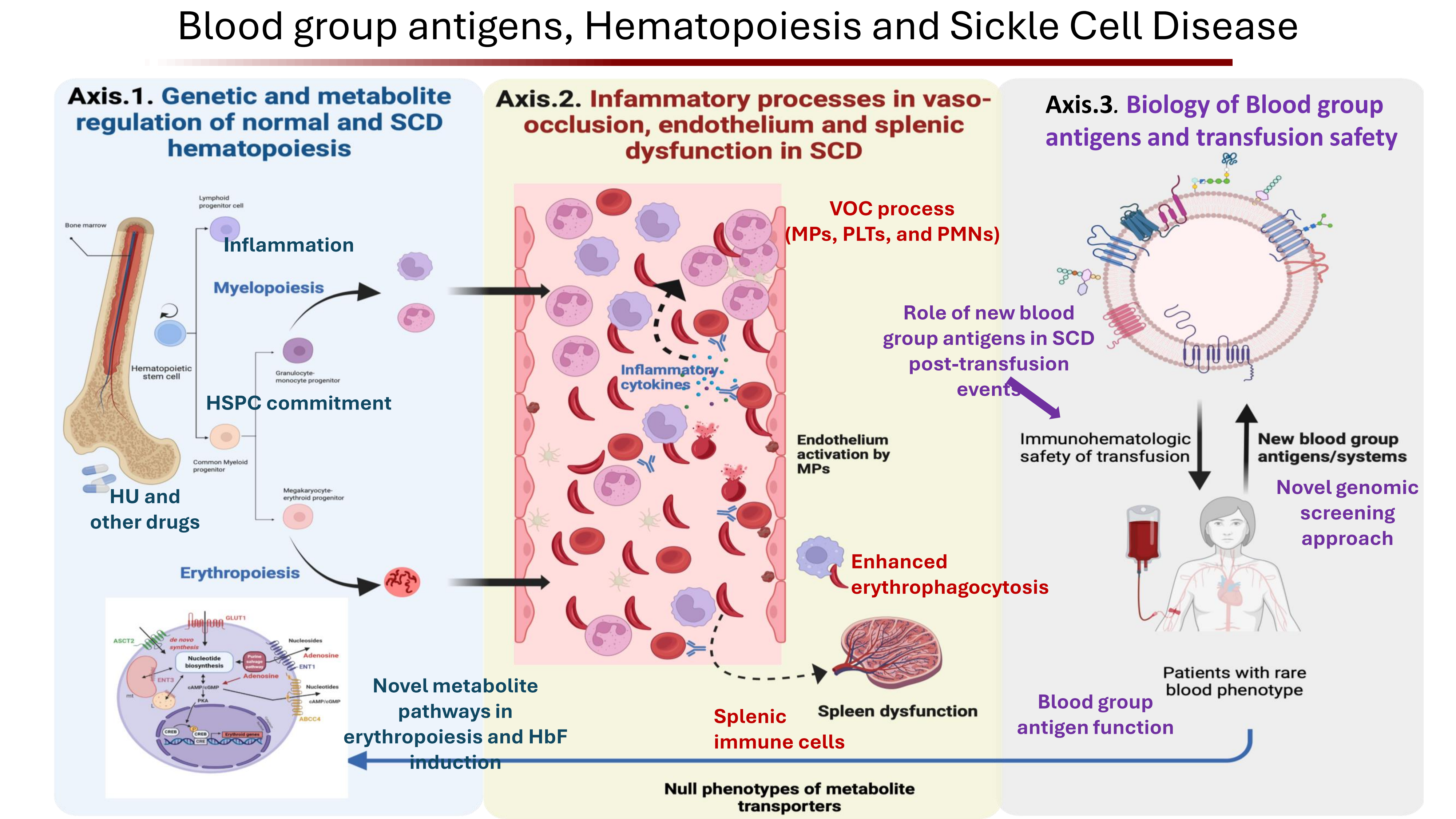
A major focus of our laboratory is to elucidate the molecular and
cellular mechanisms regulating hematopoiesis and erythropoiesis
under both physiological and pathological conditions.
We investigate how aging, inflammation, and sickle cell disease
(SCD) alter hematopoietic homeostasis, with particular emphasis on
the interactions between hematopoietic cells and their
microenvironment.
Key research questions
-
How does inflammation impair hematopoiesis and erythropoiesis?
-
Which metabolic and cytokine signaling pathways drive these
alterations?
-
Which transcriptional and epigenetic programs regulate
hematopoietic dysfunction?
By integrating molecular, cellular, and translational approaches,
we aim to identify the mechanisms underlying ineffective
erythropoiesis and uncover novel therapeutic targets for
inflammatory anemia and sickle cell disease.
Ongoing
02
Sickle Cell Disease Pathophysiology
We investigate the cellular and molecular mechanisms responsible
for both the acute and chronic complications of sickle cell disease.
A major focus of our work is understanding how chronic inflammation
contributes to vaso-occlusion, endothelial activation, splenic
dysfunction, and progressive organ damage.
Using multidisciplinary approaches that combine experimental
models, patient samples, and translational research, we seek to
identify novel biomarkers and therapeutic targets to improve
patient care and long-term clinical outcomes.
Ongoing
03
Blood Group Antigens and Transfusion Medicine
Our laboratory investigates the biology, genetic diversity, and
physiological functions of blood group antigens.
We are particularly interested in understanding how blood group
polymorphisms influence alloimmunization, transfusion compatibility,
and transfusion safety, especially in patients with rare blood
phenotypes and those requiring chronic transfusion support.
Our objective is to advance precision transfusion medicine and
reduce transfusion-related complications through a better
understanding of blood group biology.